
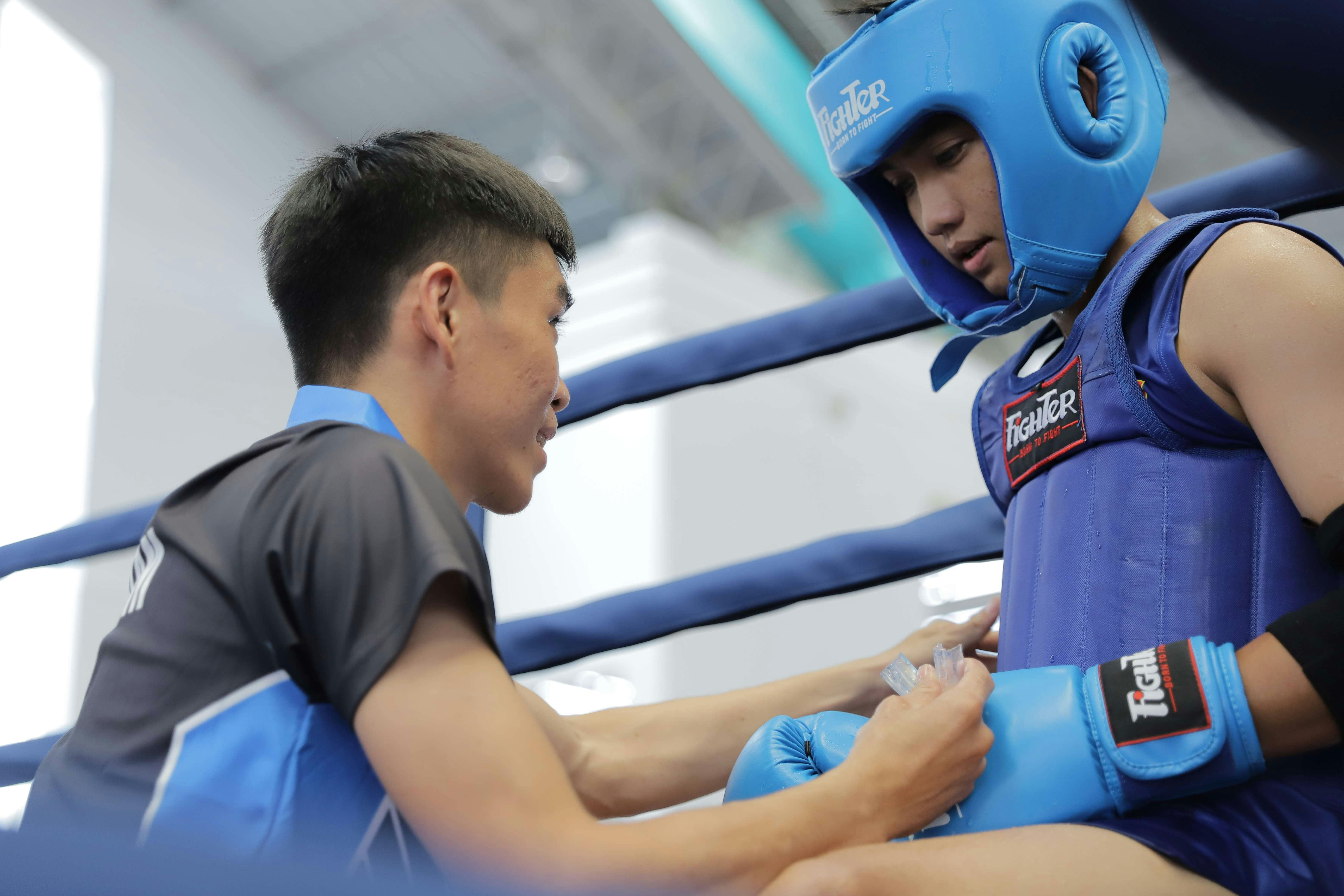
Stopping a practice to explain something feels like the moment coaching happens. It is also the moment football stops, and the balance between the two decides how much a session achieves.
The stoppage costs more than its own length
A thirty-second explanation removes far more than thirty seconds, because players cool down, concentration drifts and the practice needs restarting.
Repeated across a session, frequent stoppages can consume a substantial share of the available time and reduce the physical load considerably.
Since repetition is what builds the behaviour, time spent talking about it is time not spent doing it.
Information delivered in a group is diluted
A point directed at one player but delivered to twenty is only relevant to a fraction of them, and the rest are waiting.
Group stoppages are worth their cost when the issue affects the whole team, such as a structural misunderstanding or a shared trigger.
Individual issues are better handled while play continues, quietly and near the player concerned.
Coaches who position themselves close to the area of the pitch a theme relates to can deliver several individual points during a single practice without ever halting it.
Timing determines whether it is remembered
Feedback given immediately after the moment, while the player can still recall what he saw and felt, attaches to the experience.
The same point made ten minutes later requires the player to reconstruct the situation first, and much of it is gone.
Coaches who cannot intervene immediately often note the moment and address it at the next natural break rather than interrupting.
Questions transfer better than corrections
Telling a player where to stand produces compliance in that situation. Asking what he saw produces a decision process that generalises to situations the coach did not anticipate.
Questions take longer, which means fewer of them fit into a session, so they are reserved for the recurring problems rather than one-off errors.
The trade-off between coverage and depth is the same one that governs how often to stop at all.
Session design reduces the need to intervene
Most stoppages exist because the practice is not producing the behaviour on its own, which points at the design rather than the players.
Adjusting the space, the numbers or the scoring frequently removes the problem without a word being spoken.
Coaches who review their own sessions by counting stoppages usually find the number falls once they begin treating each one as evidence about the exercise.