
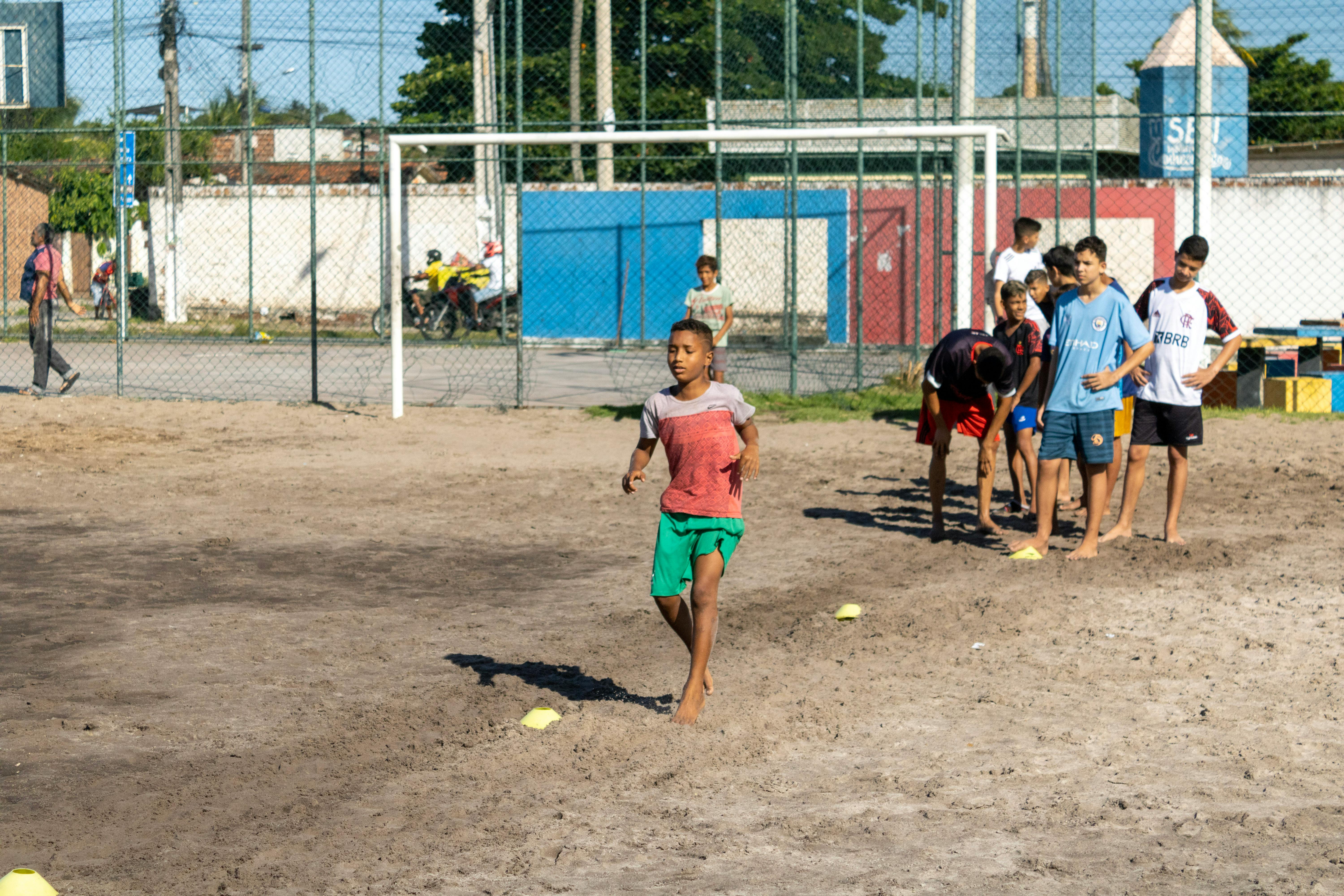
Youth soccer in the United States is largely funded by families rather than clubs, and that funding model has tactical consequences at the top of the game. The pool a national team selects from has already been filtered by cost.
How the funding model differs
In much of the world, professional clubs run academies and absorb the cost of developing players, treating it as an investment recovered through transfers or first team use. Families pay little.
In the American system, competitive youth clubs are typically funded by registration fees, travel costs and equipment paid by parents. The club's revenue comes from participation rather than from producing professionals.
That inverts the incentive. A club that keeps many paying families is financially healthy even if it never develops a professional player.
Cost filters before ability does
A player's progression through the youth pyramid requires a family able to fund fees and, crucially, to drive or fly to matches. The barrier is time as much as money.
The result is a talent pool weighted toward households with disposable income and flexible schedules. Ability is only the second filter applied.
Whole categories of promising players never enter the system, not because they were assessed and rejected, but because they were never assessed at all.
Travel distance compounds the problem
North American geography means competitive youth leagues often span hundreds of miles. A weekend fixture can require a flight or a long drive and a hotel.
This is a cost that simply does not exist in denser soccer countries, where a strong opponent may be a short bus ride away. Distance converts directly into fees.
It also reduces training time relative to match time, since a weekend absorbed by travel is a weekend not spent on the practice field. Development suffers on both sides.
Why clubs resist changing it
A club that reduces fees must replace the revenue, usually through professional affiliation or sponsorship. Most youth clubs have neither.
Professional academies attached to MLS clubs have moved toward free-to-player models, which removes the barrier for the players they can reach. Their scouting radius is limited compared with the size of the country.
Between those academies and recreational soccer sits a large, expensive middle tier that most competitive players still pass through. That tier is where the filtering happens.
What it means for the national picture
A country selecting from a filtered pool is not selecting from its population. The consequence is not a shortage of good players but a narrower range of the kinds of players produced.
Development environments shaped by paying customers tend to reward visible outcomes, which pushes coaching toward results and physically mature players. Technical late developers are less well served.
Understanding this explains more about the American player profile than any argument about coaching methods. The pipeline's shape starts at the point of entry.